

EXTRA LIFE-CHANGING RESULTS
FOR YOUR PATIENTS WITH ANIRIDIA AND IRIS DEFECTS
With the premium ARTIFICIALIRIS platform, you have the optimal treatment option for patients with complete and partial aniridia and iris defects. The unique foldable implant provides the solution for medical and aesthetic rehabilitation.1
A success story that has helped more than 7,500 patients achieve demonstrably life-changing results to date.
THE SUCCESS STORY OF ARTIFICIALIRIS
MDR Certification for ARTIFICIALIRIS
Official launch of ARTIFICIALIRIS SELECT
ARTIFICIALIRIS CUSTOMFLEX® has been approved for reimbursement in France
ARTIFICIALIRIS CUSTOMFLEX® has received reimbursement in the U.S.
More than 4,200 ARTIFICIALIRIS CUSTOMFLEX®
implants worldwideFDA Approval ARTIFICIALIRIS CUSTOMFLEX®
1,000 ARTIFICIALIRIS implants in more than 40 countries
CE Approval ARTIFICIALIRIS
1. Implantation of an
ARTIFICIALIRIS in the
USA
Official Launch
of ARTIFICIALIRIS
1. Implantation of an
ARTIFICIALIRIS Fiber
Free
World's first implantation of an ARTIFICIALIRIS with Fiber by Prof. H.-R. Koch (Germany)
ETIOLOGY OF ANIRIDIA
Complete or partial aniridia may be congenital or acquired as a result of trauma or disease.
Impairment caused by aniridia:
- Loss of vision2
- Increased sensitivity to glare2
- Loss of depth of field2
- Negative effects on quality of life2
How can these issues be mitigated or completely resolved using the ARTIFICIALIRIS ?
MEDICALLY EFFECTIVE THANKS TO EXTRA-CONTROLLED LIGHT INGRESS
The regulated light transmission reduces visual symptoms such as light sensitivity and glare.3
It can be used to treat transillumination defects.1
The medical efficacy of the ARTIFICIALIRIS CUSTOMFLEX® has been clinically confirmed. The implant has been accredited with the CE mark and approved by the FDA (U.S. Food and Drug Administration).
In 2022, the implant celebrated its 20th anniversary.
CONFIRMED BY CLINICAL STUDIES
Patients report a significant improvement in their sensitivity to light and glare.3
The patients were very satisfied or satisfied with their physical appearance.3
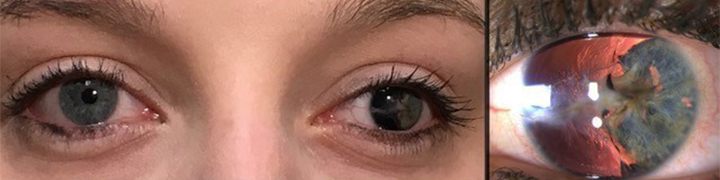
Female patient with aniridia of the left eye.4
Images courtesy of Dr. Michael Snyder.
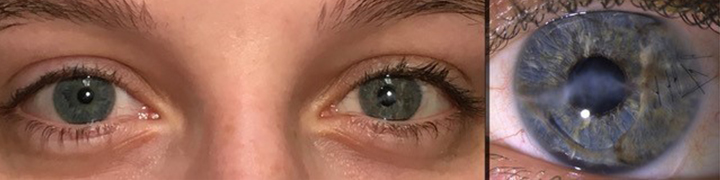
The same patient following implantation of the ARTIFICIALIRIS CUSTOMFLEX®.4
Images courtesy of Dr. Michael Snyder.
IMMEDIATE VISIBLE RESULTS THROUGH CUSTOMIZED COLOR MATCHING
A unique treatment option of this kind for patients with aniridia and iris defects. Aesthetic rehabilitation using a custom-made iris implant results in very high patient satisfaction and makes a significant contribution to improving the quality of life for patients with aniridia.
HOW THE ARTIFICIALIRIS WORKS
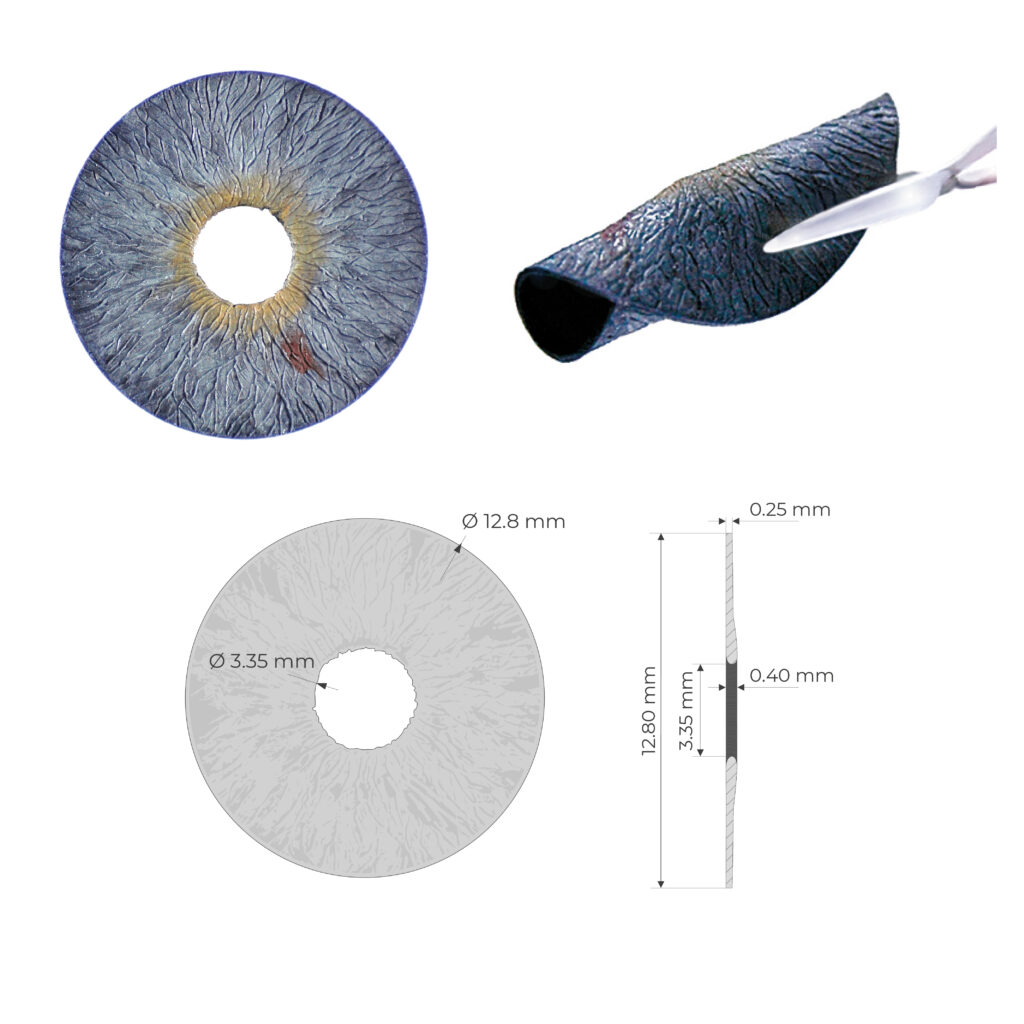
- Total diameter 12.8 mm – designed for custom sizing to suit the specific implant site
- Ultra-thin design made of biocompatible silicone with optional reinforcement via embedded fabric – for maximum flexibility in handling and use
- Fixed pupil aperture of 3.35 mm – an average value for all lighting conditions
- Opaque black back surface – for 100% light absorption5
BENEFITS OF THE ARTIFICIALIRIS CUSTOMFLEX®
- Custom-colored to match each patient and hand-painted
- With a 3D-textured surface that closely mimics the natural iris
- Impressively realistic results
WHAT PATIENTS SAY ABOUT THEIR ARTIFICIALIRIS CUSTOMFLEX®
“On September 24, my ARTIFICIALIRIS CUSTOMFLEX® was implanted. Given the circumstances, the result couldn’t have been better. I thank you from the bottom of my heart for your support during the preparation period. And a heartfelt thank you to the artist.
The color is spot on.”
“This ARTIFICIALIRIS has changed my life. I see the world more clearly, have gained new self-confidence, and feel comfortable looking people in the eye again.”
“The first time I looked in the mirror... I had to cry with happiness: I hadn’t expected such a beautiful result.”
FACTS ABOUT THE ARTIFICIALIRIS
TWO MODELS FOR MAXIMUM FLEXIBILITY
The ARTIFICIALIRIS CUSTOMFLEX® enables the highest level of patient-specific treatment. In addition to the appearance, the application options can also be flexibly tailored to the anatomy and initial condition of the affected eye.
Because no two cases are alike: choose the appropriate model based on the specific indication:

ARTIFICIALIRIS FIBER FREE - THE STANDARD SOLUTION
The flexible option for implantation in the capsular bag and ciliary sulcus, as well as variations with suture fixation. Designed for cases where suture fixation is not indicated; suture fixation is possible using the appropriate technique.

ARTIFICIALIRIS WITH FIBER - FOR SPECIAL INDICATIONS
For the treatment of aniridia in cases where suture fixation is indicated.
Used to provide greater stability and tensile strength in specialized prosthetic applications.
APPLICATION
SUITABLE FOR INJECTION MOLDING
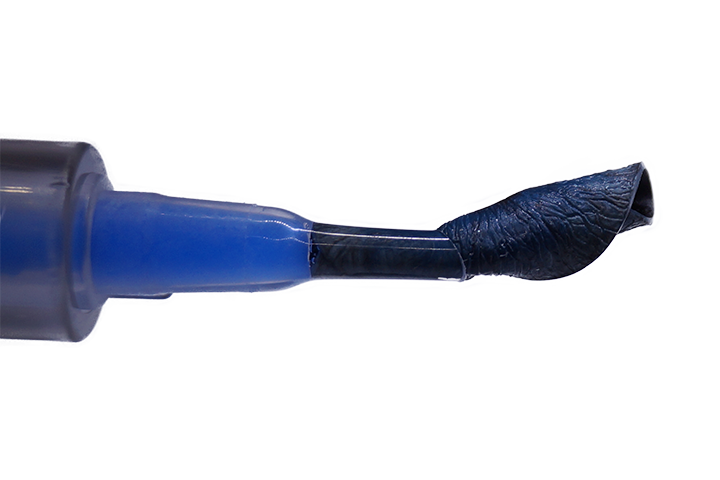
The ARTIFICIALIRIS CUSTOMFLEX® is made of highly biocompatible flexible silicone material that has been clinically proven over the past two decades. It can be implanted in a folded or rolled state using a small-incision technique.
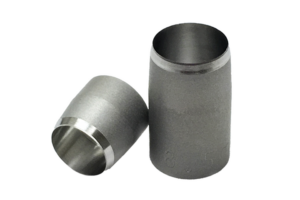
DRILLABLE
The ARTIFICIALIRIS CUSTOMFLEX® has a total diameter of 12.8 mm and can be customized in shape and size to match the specific iris defect.
Discover our coordinated selection of trephines:
Diameter: 8.0–12.5 mm
Graduation: 0.5 mm
IMPLANTATION METHODS – A WIDE RANGE OF OPTIONS
The ARTIFICIALIRIS CUSTOMFLEX® allows for a wide range of implantation methods, tailored to the specific conditions of the affected eye.1 Stay flexible — even during the procedure. The iris implant can be combined with virtually all IOL models.
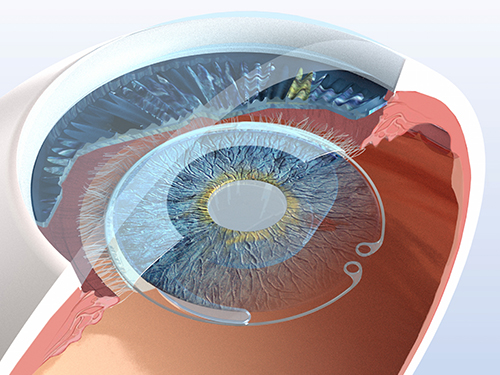
ARTIFICIALIRIS CUSTOMFLEX®, IOL, and capsular ring in the capsular bag
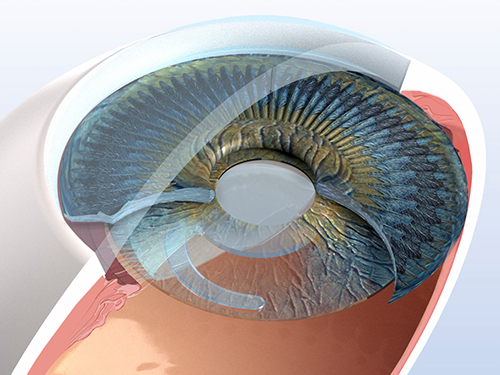
ARTIFICIALIRIS CUSTOMFLEX®, in the sulcus, IOL in the capsular bag
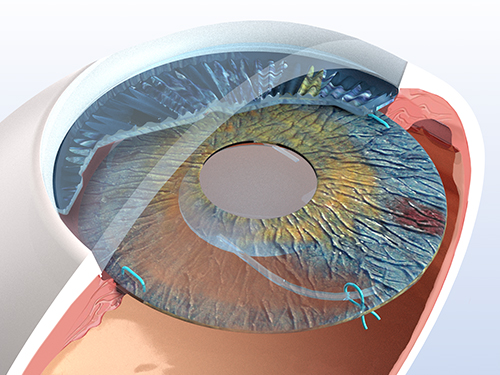
ARTIFICIALIRIS CUSTOMFLEX® and IOL fixed separately in the sulcus
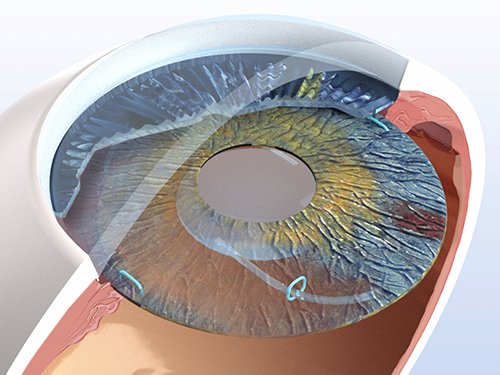
IOL fixed to ARTIFICIALIRIS CUSTOMFLEX®, implanted in the sulcus
SURGERY VIDEOS
SURGICAL VIDEOS ARTIFICIALIRIS: Sulcus implantation – without suture fixation
- Implantation ARTIFICIALIRIS using a scleral-fixed Carlevale IOL
Courtesy of Prof. Dr. Lyubonmyr Lytvynchuk, Germany
- Implantation without suture fixation using the Yamane technique
Courtesy of Prof. W. J. Mayer, Germany - Traumatic aniridia – implantation with forceps
Courtesy of Prof. H.-R. Koch, Germany - Congenital aniridia – Implantation with forceps
Courtesy of Prof. H.-R. Koch, Germany - Pseudophakia – Implantation with forceps
Courtesy of Prof. S. Kaminski, Switzerland - CTR application – Implantation with forceps – bilateral postoperative view
Courtesy of Dr. H. Hashemi, Iran - Loading the injector and implantation
Courtesy of Dr. M. Snyder, USA - Clear cornea – Implantation with injector
Courtesy of Dr. C. Mayer, Germany - Scleral tunnel – Implantation with injector
Courtesy of Dr. C. Mayer, Germany
ARTIFICIALIRIS: Sulcus implantation – with suture fixation
- ARTIFICIALIRIS and IOL Implantation in 2 Steps
Courtesy of Prof. C. Mayer, Germany - Fixation of ARTIFICIALIRIS and IOL via scleral pockets
Courtesy of Dr. M. Dominguez, France - Implantation of ARTIFICIALIRIS with Carlevale IOL
Courtesy of Prof. Peter Szurman, Germany
ARTIFICIALIRIS: Implantation into the capsular bag
- Implantation of ARTIFICIALIRIS CUSTOMFLEX® and IOL into the capsular bag
Courtesy of Dr. S. Roman, France
ORDERING PROCESS
1. ONLINE CERTIFICATION COURSE
IRIS experts to ensure the highest training standards for the use of ARTIFICIALIRIS CUSTOMFLEX®.
The platform offers you:
- Up-to-date basic information on ARTIFICIALIRIS CUSTOMFLEX®
- Information on application techniques
- Surgical Videos
Once you have completed the test, you will receive a certification number, which is required to place an order.
2. PRINT PHOTOS
High-quality photo prints are essential for the custom fabrication of the ARTIFICIALIRIS CUSTOMFLEX®. The color and natural appearance of the iris are based on the photos, so the quality of the prints is particularly important.
Images needed:
1. Single image of the eye to be corrected – serves as a color reference.
2. Image of both eyes – e.g., in a sunglasses frame.
Format and presentation:
- Standard size: 9×13 cm
- Iris in a single image: 3–6 cm
Quality Information:
- Check the color accuracy of the printouts beforehand.
- For best results, use a laser printer and photo paper.
- The sclera (the white part of the eye) should appear pure white and free of any color cast.
Follow-up:
- After reviewing the photos, please date and sign them.
- For more information, please refer to our guide on creating photos.
Careful preparation of the photos is an important step in ensuring that the postoperative result looks as natural as possible.
3. PLACE ORDER
When ordering ARTIFICIALIRIS CUSTOMFLEX®, please note the following:
- Production takes approximately 4 to 8 weeks
- You can download the order form here
- To place an order, you will need your certification number from the OCC
Please send the order form along with the photo prints to:
HumanOptics Holding AG
Spardorfer Str. 150
91054 Erlangen
EXPERT OPINION ON THE ARTIFICIALIRIS

“The most common thing we hear from our patients after this surgery is: ‘This has changed my life.’4
“As expected, the vast majority of patients showed a significant reduction in glare and light sensitivity. “4
“Complications such as CME and similar issues occurred remarkably rarely. In our study, CME actually occurred in just under 3% of cases, which I find quite astonishing given the truly diseased eye cohort we see in these patients.”4
“It is obvious that the custom fabrication of an index device improves the cosmetic appearance, as it better matches the remaining tissue or the person’s other eye. And its flexibility should not be underestimated as an important feature, since we can insert these devices through a standard cataract incision using a standard IOL inserter and do not have to enlarge or distort any of our existing incisions due to a concomitant cataract surgery or intraocular lens exchange.”4
Dr. Michael E. Snyder, MD, at the Cincinnati Eye Institute.
“The artificial iris prosthesis has set a new standard in the reconstruction of complex anterior segment pathologies involving partial or complete aniridia. Our patients benefit from improved visual function, reduced glare, and a satisfactory cosmetic appearance. The latter is important and legitimate, considering that trauma patients are usually young and long for a cosmetically acceptable outcome.”
Prof. Peter Szurman, M.D., Sulzbach Eye Clinic.


“A key advantage of the ARTIFICIALIRIS is the wide range of applications: scleral or sulcus fixation, as a full or partial prosthesis. This allows for the design of customized solutions for a wide variety of initial conditions. The result can thus be equally characterized by surgical elegance and aesthetic beauty.”
Prof. Urs Voßmerbäumer, M.D., Department of Ophthalmology, Frankfurt am Main (Höchst).
“The versatile silicone implant allows for a wide variety of implantation methods and surgical techniques, regardless of the IOL implantation.”6
Prof. Christian Mayer, M.D., University Eye Clinic, Heidelberg.

“Plastic reconstruction is medically necessary. It serves to improve quality of life by correcting visible defects and restoring lost bodily functions. Success is measured by the regain of function and quality of life. For me as a surgeon, the ARTIFICIALIRIS offers a unique opportunity to restore the anterior segment of malformed or severely traumatized eyes to a previously unattainable aesthetic standard, with or without the implantation of an artificial lens. The cosmetic result is often so good that patients subsequently require ophthalmological certificates. For example, for the young female driver who, due to a pupil that does not react to light, is repeatedly asked by observant police officers to undergo drug screening. Or for the aniridia patient who, following bilateral iris reconstruction, now has to have her passport updated to reflect her new eye color of light blue.”
Prof. Dr. med. Bernhard Stoffelns, FEBO, Mainz.
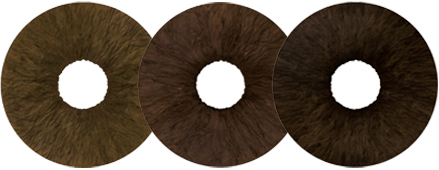
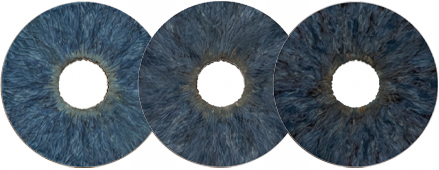
ARTIFICIALIRIS SELECT
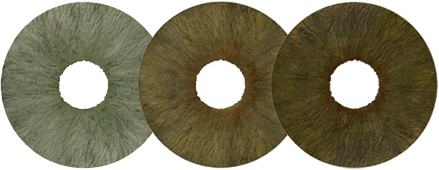
Choose from three colors: BROWN, BLUE, GREEN in the shades LIGHT, MEDIUM, DARK
- Suitable for injection molding and versatile
- Fast delivery, in stock
- Easy ordering
- Premium quality
FIND YOUR ARTIFICIALIRIS EXPERT HERE
Just click on a location near you
By clicking on the location marked in blue, you can contact your preferred representative directly.
IMPORTANT
The ARTIFICIALIRIS CUSTOMFLEX® is not intended for cosmetic changes to eye color. It has been designed for implantation in the posterior chamber of the eye and is not suitable for placement in the anterior chamber. It is strongly recommended that the ARTIFICIALIRIS CUSTOMFLEX® be inserted into the eye only after removal of the natural lens and IOL implantation.
- Ayres BD, Fant BS, Landis ZC, Miller KM, Stulting RD, Cionni RJ, Fram NR, Hamilton S, Hardten DR, Koch DD, Masket S, Price FW Jr, Rosenthal KJ, Hamill MB, Snyder ME. Results of the United States Food and Drug Administration Clinical Trial of the CustomFlex Artificial Iris. Ophthalmology. 2022 Jun;129(6):614-625.
- Mayer C, Scharf D, Khoramnia R. Austausch von Aniridie-IOL gegen individuelle Iris-IOL-Implantate [Exchange of aniridia IOLs for customized iris IOL implants]. Ophthalmologe. 2022 Feb;119(2):181-189.
- HumanOptics Data on File, Clinical Study Report: Study AI-001 (n=447 eyes), 2018.
- Provencher L, Snyder ME. Custom Artificial Iris Clinical Trial. American Academy of Ophthalmology; July 29, 2022.
- HumanOptics Data on File, Test Report: Transmittance Study of Artificial Iris, 2013.
- Mayer C, Tandogan T, Hoffmann AE, Khoramnia R. Artificial iris implantation in various iris defects and lens conditions. J Cataract Refract Surg. 2017 Jun;43(6):724-731.