

SMART FACTS
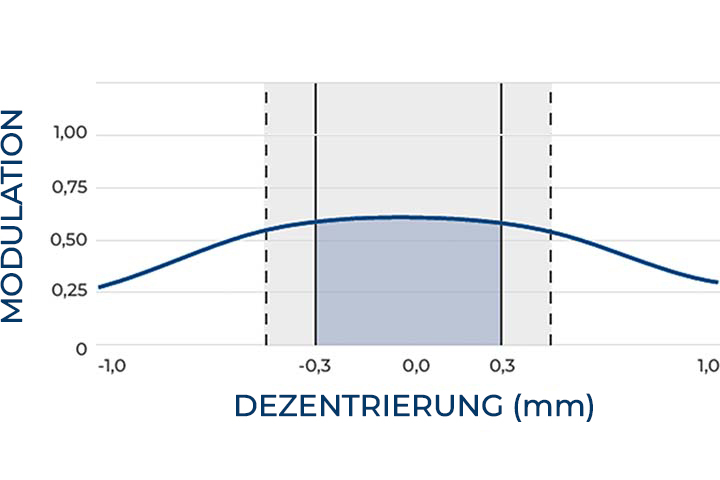
High tolerance for decentration and tilt1
Both centering-related and anatomically caused physiological decentring or tilting are accommodated, ensuring that image quality remains at a consistently high level with minimal impact from these factors.
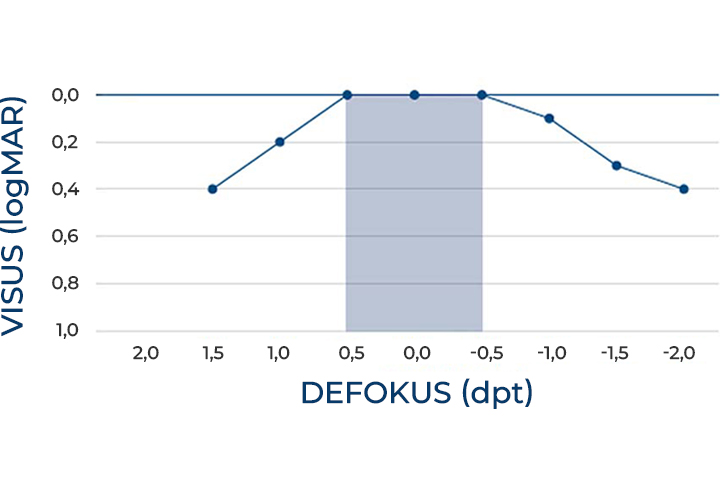
Wide Landing Zone2
Unexpected deviations from the target postoperative residual refraction in the range of ±0.5 D are generally accepted. The defocus curve remains on a consistently high visual acuity plateau.
A CONVENIENT STANDARD PROCEDURE, EVEN IN NON-STANDARD SITUATIONS
Our manufacturing expertise enables us to offer an XL product range that goes beyond standard market specifications. We cover the range from -20.0 to 60.0 D with lenses that are fully compatible with injection molding, thereby providing a convenient standard solution even for non-standard cases.
ALSO TORIC IN THE XL DELIVERY ZONE
Of course, we also offer the toric version, the TORICA®, for astigmatism correction, also available in a wide XL range with up to 20.0 D cylinder.

“The wide range of ASPIRA® lenses saves us from having to use custom solutions and makes additional adjustments in the OR unnecessary. At the same time, it allows us to provide reliable patient care even outside the standard diopter ranges. This keeps our workflows efficient and gives us a high degree of confidence.”
Prof. Gerd U. Auffarth, M.D., FEBO, Heidelberg.
“Many systems reach their limits at higher cylinder values—but not the TORICA®. The wide toric range significantly expands our therapeutic options.”
Armin Wolf, M.D., Ph.D., Ulm.

Technical Specifications
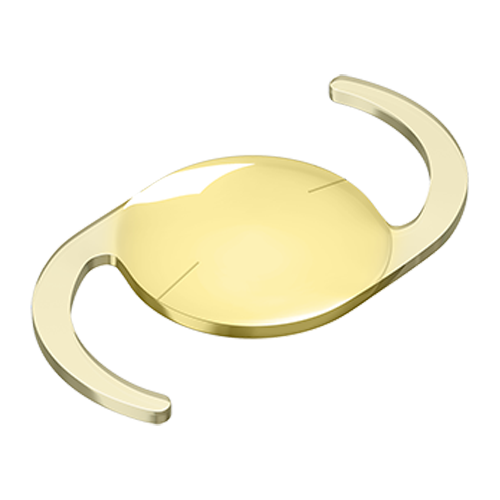
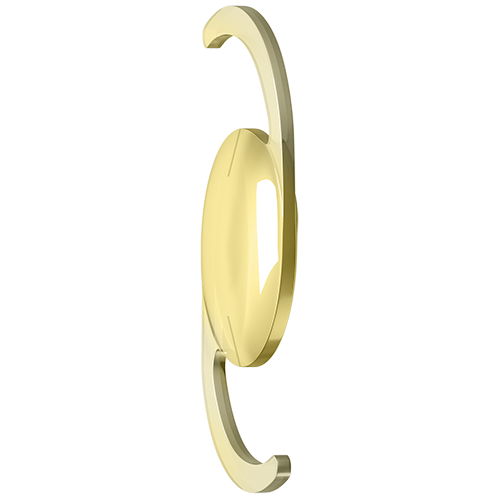
- One-piece, foldable posterior chamber IOL with a C-loop haptic design
- Monofocal aspheric, aberration-free, or monofocal toric, omnidirectional, aberration-free
- Back surface with a 360° lens epithelial cell barrier
- Optical diameter 6.0 mm, total diameter 12.5 mm
- UV-absorbing hydrophilic acrylic (water content 26 % at 35 °C)
- Blue light filter available as an option
- Abbe number: 56
- Refractive index: 1.46
ASPIRA®
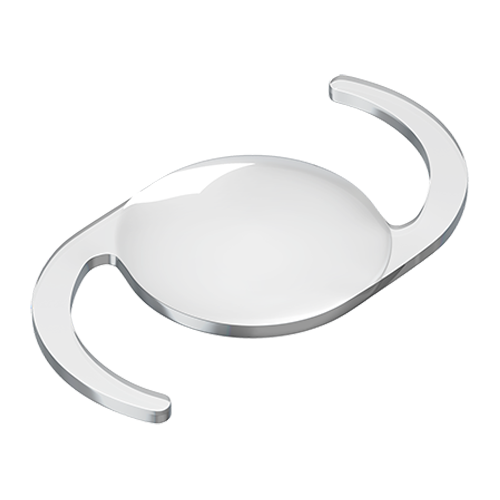
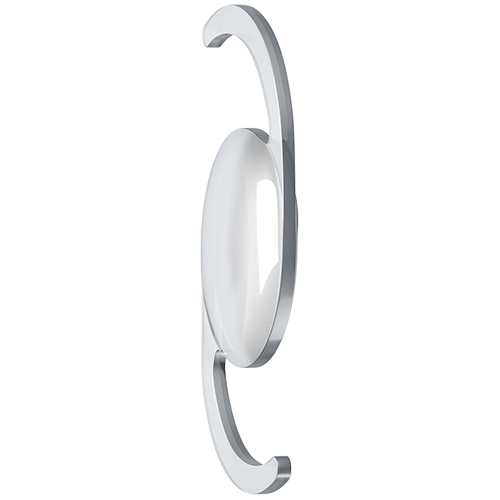
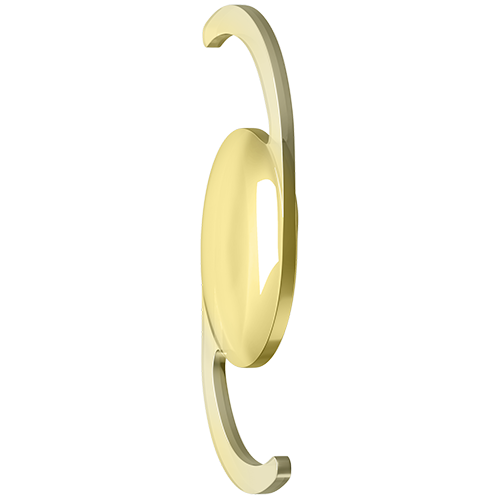
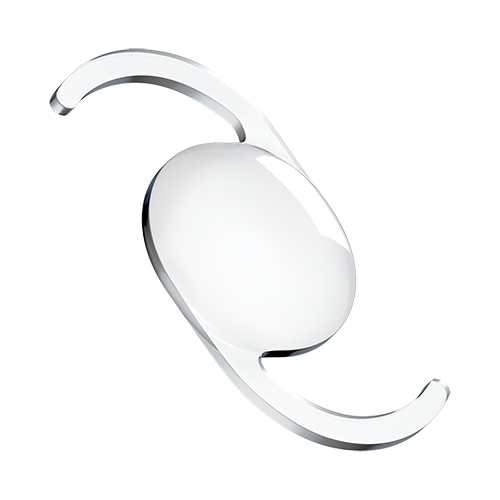
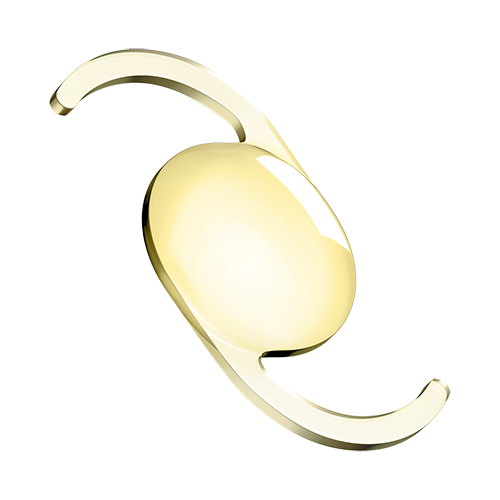
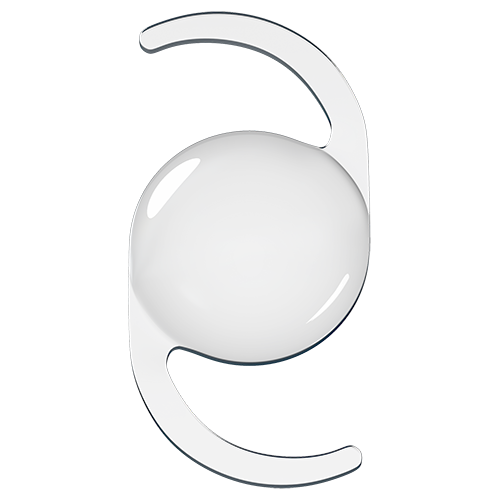
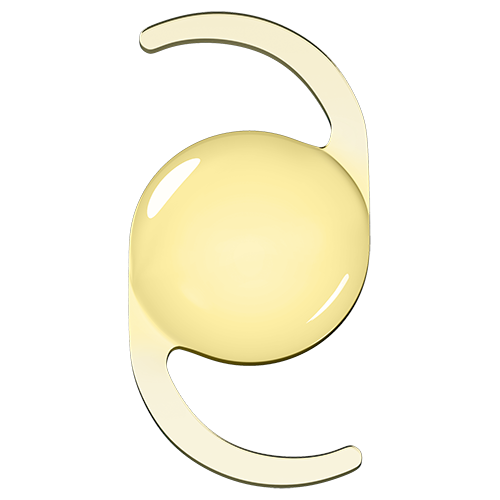
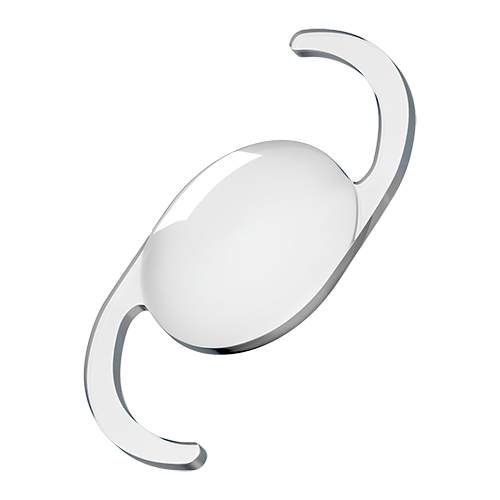
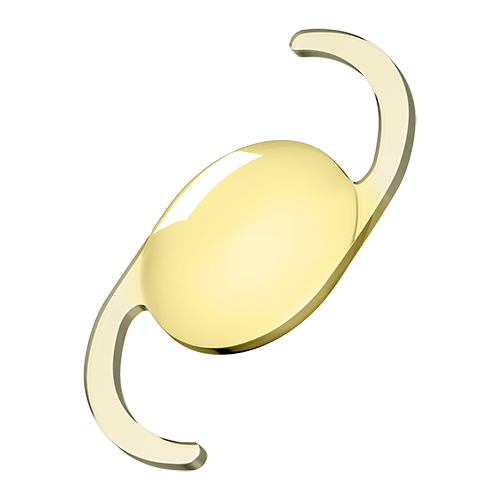
Without a blue light filter
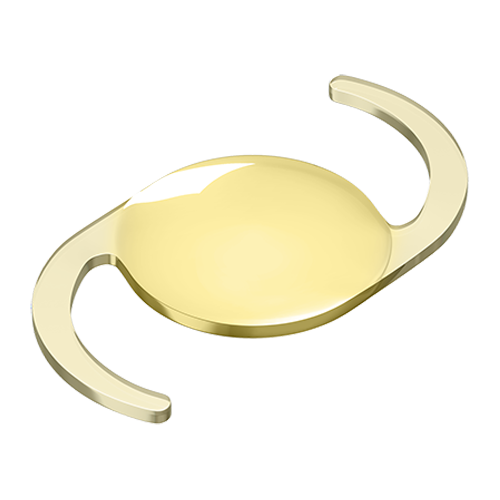
With blue light filter
Torica®
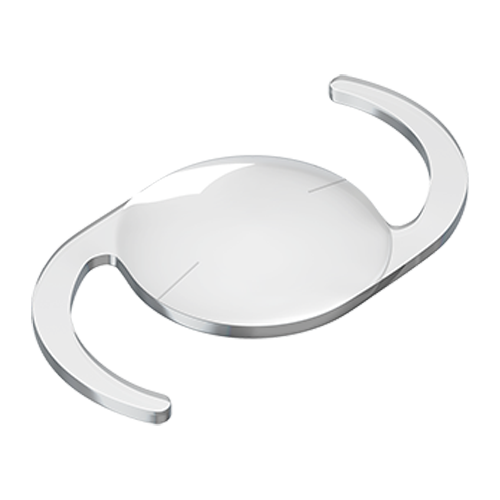
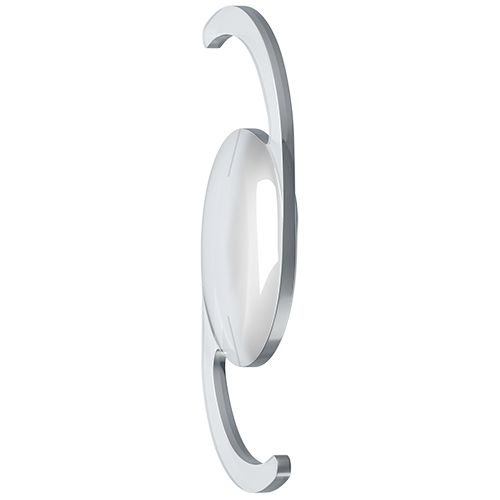
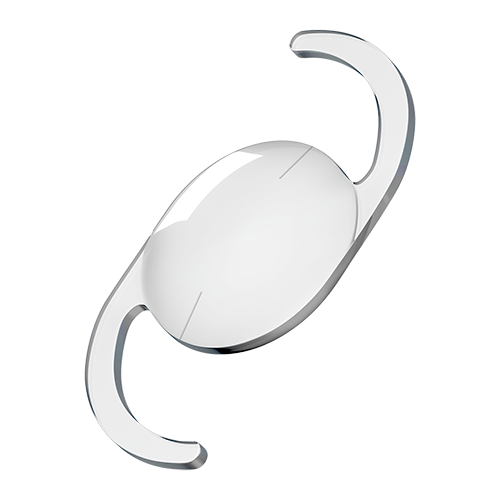
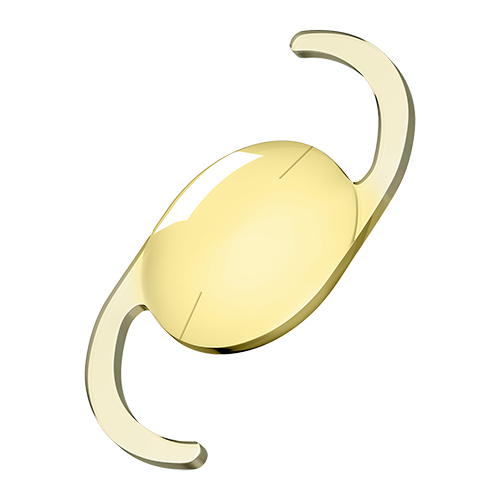
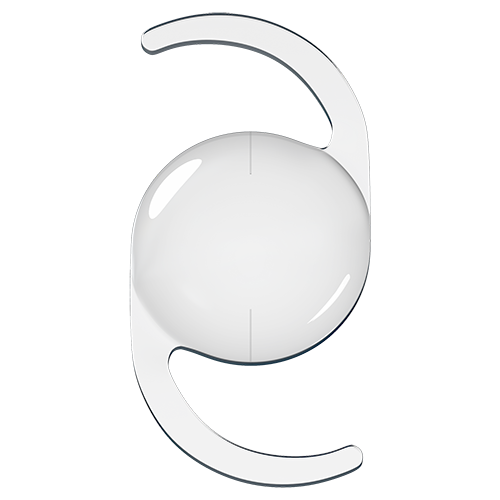
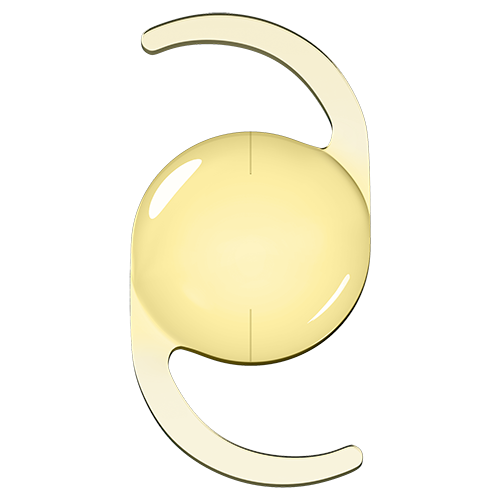
Without a blue light filter
With blue light filter
XL delivery area
PRELOADED IN THE SAFELOADER® | IN THE COMPACT LINE | |
|---|---|---|
ASPIRA®-aA / ASPIRA®-aAY | 10.0 to 30.0 in 0.5 D increments | -20.0 to 60.0 in 1.0 D increments |
Toric version: TORICA®-aA / TORICA®-aAY | – | SE: -20.0 to 60.0 in 0.5 D increments Cyl: 1.0 to 20.0 in 0.5 D increments |
Our goal is to help patients achieve optimal visual performance, even in complex and highly challenging cases. For this reason, we can also manufacture custom solutions beyond our standard XL range upon request.*
*Available only as a custom-made product and subject to an individual feasibility assessment.
APPLICATION
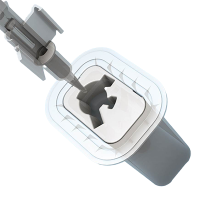
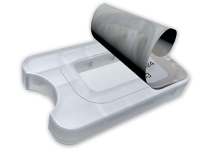
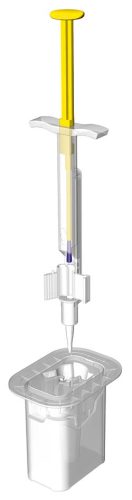
Whether you choose the space-saving Compact Line or the Safeloader preloaded implantation system, we recommend the Medicel AccuJectTM in the exclusive yellow HumanOptics version for both systems.
APPLICATION TEAM
Take advantage of our personalized calculation service to work with us in finding the right implant for your patient’s needs. We offer doctors the option to contact us directly with their calculation values. We will calculate the lens based on your specific measurement data!
Do you have medical or technical questions?
You can quickly reach our specialist departments through our switchboard (+49 (0) 9131 50 66 5-0).

95% OF OUR CUSTOMERS TRUST THE EXPERTISE OF OUR APPLICATION TEAM.3
REPORTS FROM CLINICAL PRACTICE
The outstanding efficacy and safety of ASPIRA® and TORICA® have been confirmed in clinical use.4,5
No matter how high the quality of an IOL, it is only as good as its practical usability. That is why real-world experience reports are usually much more meaningful than theoretical technical data. See for yourself.
ASPIRA®
Intraocular lens power calculations in eyes with pseudoexfoliation syndrome
Walz A, Kustra A, Rozegnal-Madehj A., et al.
Intraocular lens power calculations in eyes with pseudoexfoliation syndrome
Sci Rep 2021 Sep 24; 11(1):19071
Click here for the publication
Bilateral implantation of +56 and +58 diopter custom-made intraocular lenses in patient with extreme nanophthalmos
Schrecker J, Langenbucher A, Seitz B, et al.
Bilateral implantation of +56 and +58 diopter custom-made intraocular lenses in a patient with extreme nanophthalmos
Am J Ophthalmol Case Rep. Oct 9, 2020
In vitro optical quality assessment of a monofocal intraocular lens sutured to an artificial iris
First results with a new intraocular lens design for the individual correction of spherical aberration
Effect of Spherical Aberration on the Optical Quality after Implantation of Two Different Aspherical Intraocular Lenses
Lasta M, Mihálth K, Kovács I, et al.
Effect of Spherical Aberration on the Optical Quality after Implantation of Two Different Aspherical Intraocular Lenses
J Ophthalmol. 2017;2017:8039719
Click here for the publication
Comparison of visual function with aspheric yellow, aspheric clear and spherical clear intraocular lens
Küchle M
Comparison of visual function with aspheric yellow, aspheric clear, and spherical clear intraocular lenses
J Emmetropia 2013 Jul; 4:123-130
Click here for the publication
Effect of decentration and tilt on the image quality of aspheric intraocular lens designs in a model eye
Eppig T, Scholz K, Löffler A, et al.
Effect of decentration and tilt on the image quality of aspheric intraocular lens designs in a model eye
J Cataract Refract Surg 2009 Jun; 35:1091-1100
Click here for the publication
TORICA®
Long-term rotational stability and visual outcomes of a single-piece hydrophilic acrylic toric IOL: a 1.5-year follow-up
Gyöngyössy B, Jirak P, Schönherr U
Long-term rotational stability and visual outcomes of a single-piece hydrophilic acrylic toric IOL: a 1.5-year follow-up
Int J Ophthalmol 2017 Apr 18; 10(4): 573-578
Click here for the publication
Rotational stability and patient satisfaction after implantation of a new toric IOL
Gyöngyössy B, Jirak P, Schönherr U
Rotational stability and patient satisfaction after implantation of a new toric IOL
Eur J Ophthalmol 2016 Jun; 26:321-327
Click here for the publication
The Effect of Axis Length on Clinical Outcomes Following Implantation of a Hydrophilic Toric Intraocular Lens
Anwar M, Rusch W, Altas C, et al.
Effect of axial length on clinical outcomes following implantation of a hydrophilic toric intraocular lens
Presentation DOG 2022 Oct
Interim analysis of the effect of axis length on rotational stability and clinical outcomes following implantation of a hydrophilic toric intraocular lens
Rusch W, Anwar M, Altas C et al.
Interim analysis of the influence of axis length on rotational stability and clinical outcomes following implantation of a hydrophilic toric intraocular lens</
Presentation DGII March 2023
Click here for the publication
Sie haben noch Fragen oder möchten unsere Produkte bestellen?
Melden Sie sich gerne bei unserem Außendienst-Team für ein individuelles Beratungsgespräch, spezifische Informationen zu unseren Produkten oder Trainingsmaßnahmen und OP-Hospitationen.
Unsere Mitarbeiterinnen und Mitarbeiter sind gerne EXTRA für Sie da.
1. Eppig T, Scholz K, Löffler A, Messner A, Langenbucher A. Effect of decentration and tilt on the image quality of aspheric intraocular lens designs in a model eye. J Cataract Refract Surg. June 2009;35(6):1091-100.
2. Schrecker J, Langenbucher A, Seitz B, Eppig T. First results with a new intraocular lens design for the individual correction of spherical aberration. J Cataract Refract Surg. 2018 Oct;44(10):1211-1219.
3. HumanOptics Data on File, 2021.
4. University Medical Center Mainz (2026), World Record: Correction of Extreme Refractive Error of 40 Diopters Cylinder Power, https://www.unimedizin-mainz.de/
5. Gyöngyössy B, Jirak P, Schönherr U. Rotational stability and patient satisfaction after implantation of a new toric IOL. Eur J Ophthalmol. 2016 Jun 10;26(4):321-7.