
HELP FOR PATIENTS WITH ANIRIDIA
Do you or one of your relatives suffer from aniridia or an iris defect?
HumanOptics offers patients with aniridia and iris defects a form of treatment that can significantly improve their quality of life –
the ARTIFICIALIRIS.
But what exactly is aniridia and how does a defect in the iris (iris) occur?
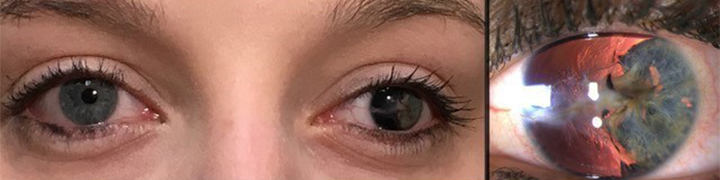
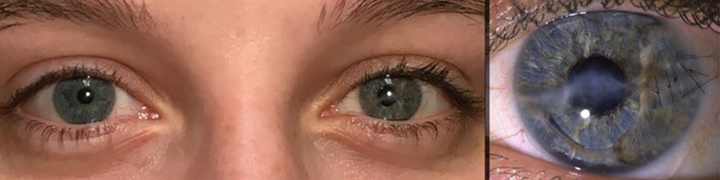
Aniridia means that the iris – the area of the eye that determines our eye color – is partially or completely missing. Those affected suffer both from severe glare and from their own external appearance. An iris defect can be congenital or caused by injury, for example from gardening accidents with sharp objects or contact with corrosive chemicals in the home. These are just two of many possible causes.
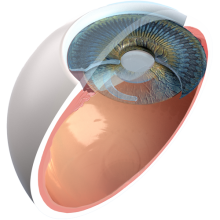
But there is a possible solution for these patients: the ARTIFICIALIRIS. This is an artificial iris that is inserted into the eye as a supplement to the missing or defective iris. It can be produced individually for each patient and is precisely modeled on the appearance of the natural iris of each individual. The iris implant restores the eye’s natural iris function and significantly improves the quality of vision.
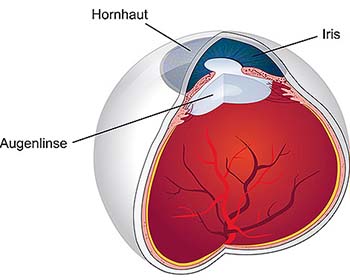
Cross-section of the eye and position of the iris.
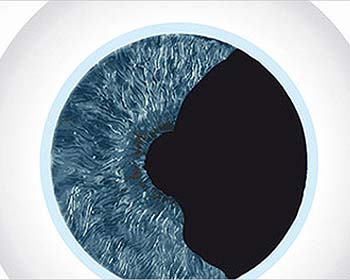
Schematic representation of the iris defect.
WHAT ARE THE CONSEQUENCES OF ANIRIDIA OR IRIS DEFECTS?
In a healthy eye, the iris controls the amount of light entering the eye via the pupil diameter. When it is bright, the pupil becomes smaller – when it is dark, it becomes larger. In this way, contrasts are perceived well and the depth of field – the simultaneous sharp perception of objects that are close and somewhat further away – is regulated. If the iris is missing or defective, light can enter the eye unhindered. Those affected have to struggle with the following consequences.
What challenges do patients with aniridia and iris defects face?
- Loss of visual acuity
- Increased aperture sensitivity
- Loss of depth of field
- Negative effects on quality of life
WHAT TREATMENT OPTIONS ARE AVAILABLE FOR ANIRIDIA AND IRIS DEFECTS?
The annoying glare caused by an iris defect can be temporarily reduced with sunglasses or contact lenses. Particularly in the case of larger defects in the iris and if other treatment approaches are not satisfactory, treatment with a medical implant is the only adequate treatment option. There is a possible therapeutic solution for those affected: the ARTIFICIALIRIS.
What solution does the HumanOptics iris implant offer you?
In a short surgical procedure, the ARTIFICIALIRIS is placed in the eye in such a way that it restores the function and appearance of the defective iris. If desired, it can be custom-made for the patient in order to recreate the natural appearance as accurately as possible.
The glare function of the eye is restored and the incidence of light is regulated again. The pupil width remains the same due to the fixed pupil diameter of the implant and has been selected so that comfortable vision is possible under all light conditions. The quality of vision is significantly improved so that everyday life, work and quality of life can benefit considerably.
SPECIAL FEATURES OF THE IRIS IMPLANT FROM HUMANOPTICS
CUSTOMIZED
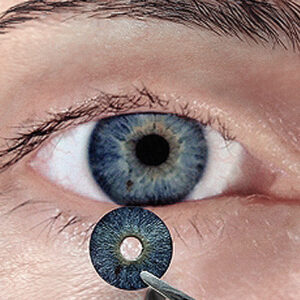
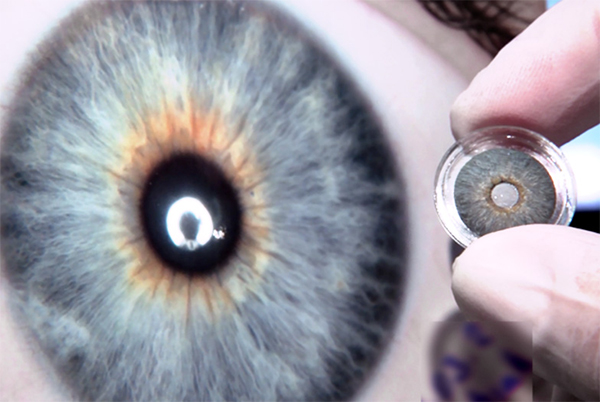
The ARTIFICIALIRIS CUSTOMFLEX®, which is individually manufactured for the patient, is modeled on the patient's own external appearance and is usually indistinguishable from a healthy eye.
IMPROVED VISUAL QUALITY
The iris implant restores the eye's natural iris function, which significantly improves the quality of vision.
THE SUPERLATIVE OF TREATMENT OPTIONS
The iris implant is based on the natural structure and personal coloring of the original iris and offers the patient a highly individual treatment.
FAST PATIENT CARE
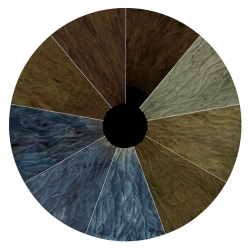
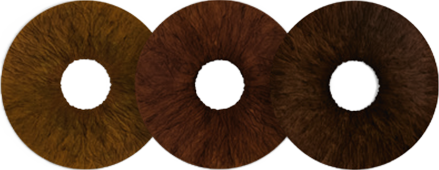
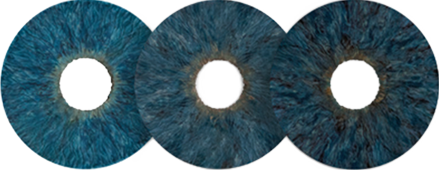
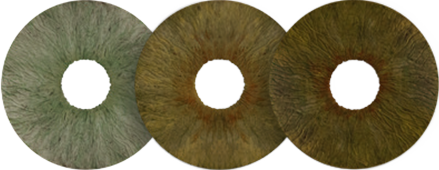
The ARTIFICIALIRIS SELECT color category is available in nine predefined color combinations in stock for fast and urgent patient care. The colors brown, blue and green are available in three different shades each: light, medium and dark. A photo of the patient's eye is not required to order the ARTIFICIALIRIS SELECT.
CLINICALLY PROVEN MEDICAL EFFICACY
The ARTIFICIALIRIS is a treatment option with CE certification. It has been proven to reduce photonic phenomena, eliminate transillumination effects and improve contrast sensitivity. The customized ARTIFICIALIRIS CUSTOMFLEX® also has FDA approval.
VERSATILE APPLICATION
The iris implant is made of highly biocompatible silicone. It is also injector-compatible and can be customized in size and shape. The implant offers the treating doctor maximum flexibility. It is available with or without tissue. This gives the doctor the freedom to decide on suture fixation during implantation.
WHAT DISTINGUISHES THE ARTIFICIALIRIS FROM HUMANOPTICS?
The ARTIFICIALIRIS from HumanOptics is unique worldwide and a medically recognized implant. The foldable artificial iris not only restores optical functionality, but also gives the eye an aesthetic appearance.
The ARTIFICIALIRIS was implanted in a patient’s eye for the first time in 2002 and is currently the only iris implant available with CE marking. Since then, more than 7500 implants have been used worldwide in patient eyes to correct aniridia and iris defects. The ARTIFICIALIRIS from HumanOptics is made of medical-grade, foldable silicone and can be customized for each patient on request.
Adapted to the iris color of the unaffected eye or after selection from the SELECT range, it is precisely handcrafted in Germany. Even the finest color nuances of the iris are individually taken into account to achieve a natural appearance. The eye is restored functionally and in terms of its external appearance, allowing the patient to participate in social life again without any worries.

CONVENTIONAL IRIS IMPLANT
- Often made of rigid material, e.g. similar to Plexiglas
- Require a relatively large incision during implantation (increased risk of infection)
-
Is often only available in a limited selection of standard colors and the fabric structure is hardly imitated
VS
ARTIFICIALIRIS
- Consists of medical-grade, foldable silicone
- Can be implanted minimally invasively using the small incision technique (accelerates the healing process)
- Individually adapted to the original iris, taking into account the finest color nuances, handcrafted or selected from standard colors
- Over 7500 implantations worldwide
- CE marking since 2011
- Individually manufactured or quickly available via color selection of the SELECT color chart
- Over 7500 implantations worldwide
- CE marking since 2011
- Individually manufactured or quickly available via color selection of the SELECT color chart
HOW DOES THE IMPLANTATION OF THE ARTIFICIALIRIS WORK?
Based on photos of the existing residual iris and the healthy iris of the second eye, the experts at HumanOptics produce a precise implant by hand or use the color fan to select a suitable color variant that is already in stock. The insertion of the ARTIFICIALIRIS is inserted under local anesthesia or general anesthesia. In standard cases, the rolled-up silicone disk is inserted through an incision of approx. 3 mm at the edge of the cornea using an injector, unfolded in the eye and fixed in place if necessary. The implantation technique used depends on the initial situation of the patient’s eye and is chosen by the doctor accordingly. Your doctor will inform you in detail about the surgical procedure and the associated risks.
The treatment result is visible immediately after the bandage is removed and the new iris can take over its function as a diaphragm. With the defined pupil width, the iris implant offers a good compromise between day and night vision. Light sensitivity is greatly reduced and the depth of field is improved.
IMPORTANT
The assumption of costs for the implant and the treatment must be agreed with the respective health insurance company. Your ophthalmologist can request a cost estimate from us for your health insurance company. Talk to your doctor about this.
WHAT PATIENTS SAY ABOUT THEIR ARTIFICIALIRIS
´
I see the world much more clearly now and have developed a whole new level of self-confidence. I make more eye contact and am no longer afraid to look at people – that used to be completely different. This prosthesis has really changed my life.”

EXPERT OPINION ON THE ARTIFICIALIRIS

“For some years now, there has been an artificial iris made of silicone, which … is foldable and can therefore be implanted via a small incision. This contributes to an excellent reduction in glare sensitivity, which is a constant nuisance for patients, along with a good cosmetic effect.”
Prof. Dr. Karl Ulrich Bartz-Schmidt, University Eye Clinic Tübingen.
“The artificial iris prosthesis set a new standard in the reconstruction of complex anterior segment pathologies with partial or complete aniridia. Our patients benefit from improved visual function, reduced glare and a satisfactory cosmetic appearance. The latter is important and legitimate, considering that trauma patients are usually young and long for a cosmetically acceptable result.”
Prof. Dr. Peter Szurman, Sulzbach Eye Clinic.

FIND YOUR ARTIFICIALIRIS EXPERT HERE
Simply click on your nearest location
You can get in touch with your desired contact person directly by clicking on the location marked in blue.